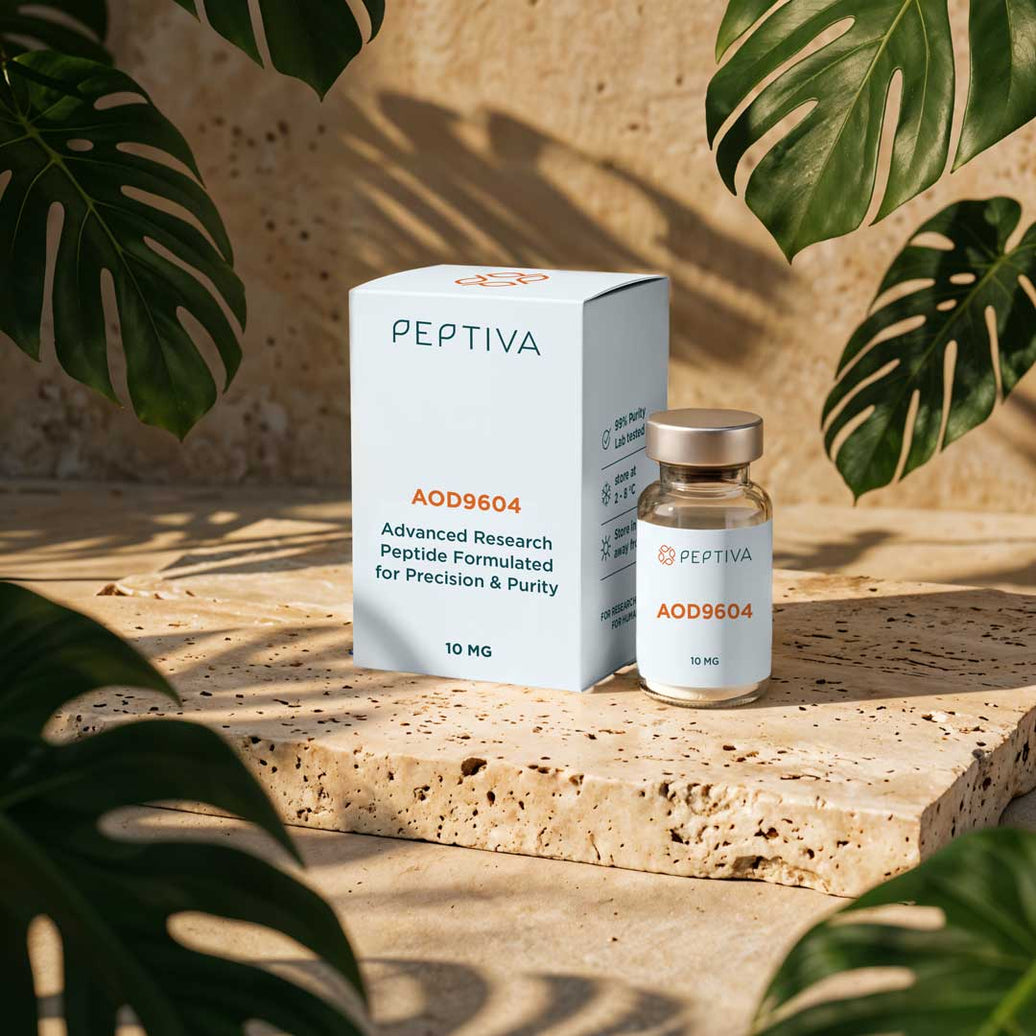
AOD-9604 is a sixteen amino acid synthetic analogue corresponding to the C-terminal region of human growth hormone (hGH), spanning residues 176 to 191. It was developed to isolate the lipolytic domain of hGH from its broader growth-promoting effects. Unlike full-length hGH, AOD-9604 does not appear to significantly stimulate IGF-1 production or insulin resistance signaling in preclinical models.
Lipolytic Signaling Research
Preclinical research has examined AOD-9604's interactions with beta-adrenergic receptors and its influence on lipolysis regulation in adipose tissue models. Studies published in Obesity Research investigated the compound's effects on fat oxidation pathways and its interactions with the hypothalamic-pituitary axis in animal models.
Receptor Interaction Studies
Research has explored AOD-9604's binding affinity for hGH receptors and its downstream signaling profile. Experimental data suggest the compound interacts with fat cell receptors through mechanisms that may involve beta-3 adrenergic receptor modulation.
Metabolic Pathway Modulation
Rodent model studies have examined AOD-9604's influence on body composition markers and lipid oxidation metrics. Research has also explored its lack of interaction with the IGF-1 axis, which distinguishes its pharmacological profile from full-length growth hormone in preclinical models.
• Heffernan M et al. (2001). The effects of human GH and its lipolytic fragment (AOD9604) on lipid metabolism. Endocrinology, 142(12), 5182–5189.
• Ng FM et al. (2000). Metabolic studies of a synthetic lipolytic domain (AOD9604) of human growth hormone. Hormone Research, 53(6), 274–278.